How AI Automation Is Transforming the Real Estate Industry
The real estate industry is experiencing a major technological shift. Artificial intelligence and automation are changing how properties are marketed, sold, managed, and analyzed. Traditional real estate operations often involve repetitive manual tasks, slow processes, and large amounts of data. AI automation helps businesses solve these problems by improving efficiency, reducing costs, and enabling faster decision-making.
Today, real estate companies are using AI-powered tools to automate workflows, manage property listings, analyze market trends, and improve customer interactions. These technologies are helping agencies, brokers, and property managers deliver better services while scaling their operations faster than ever before.
The Rise of AI Automation in Real Estate
AI automation refers to the use of artificial intelligence technologies such as machine learning, predictive analytics, and intelligent workflows to automate business processes. In real estate, these systems analyze large volumes of property data, customer behavior, and market trends to support smarter business decisions.
According to industry research from sources such as McKinsey & Company and Deloitte , automation and AI adoption across industries is growing rapidly, and real estate companies are beginning to benefit from these technologies as well.
AI automation is particularly valuable for real estate because the industry depends heavily on data, customer communication, and operational efficiency.
Key Benefits of AI Automation for Real Estate Businesses
1. Automated Lead Generation and Qualification
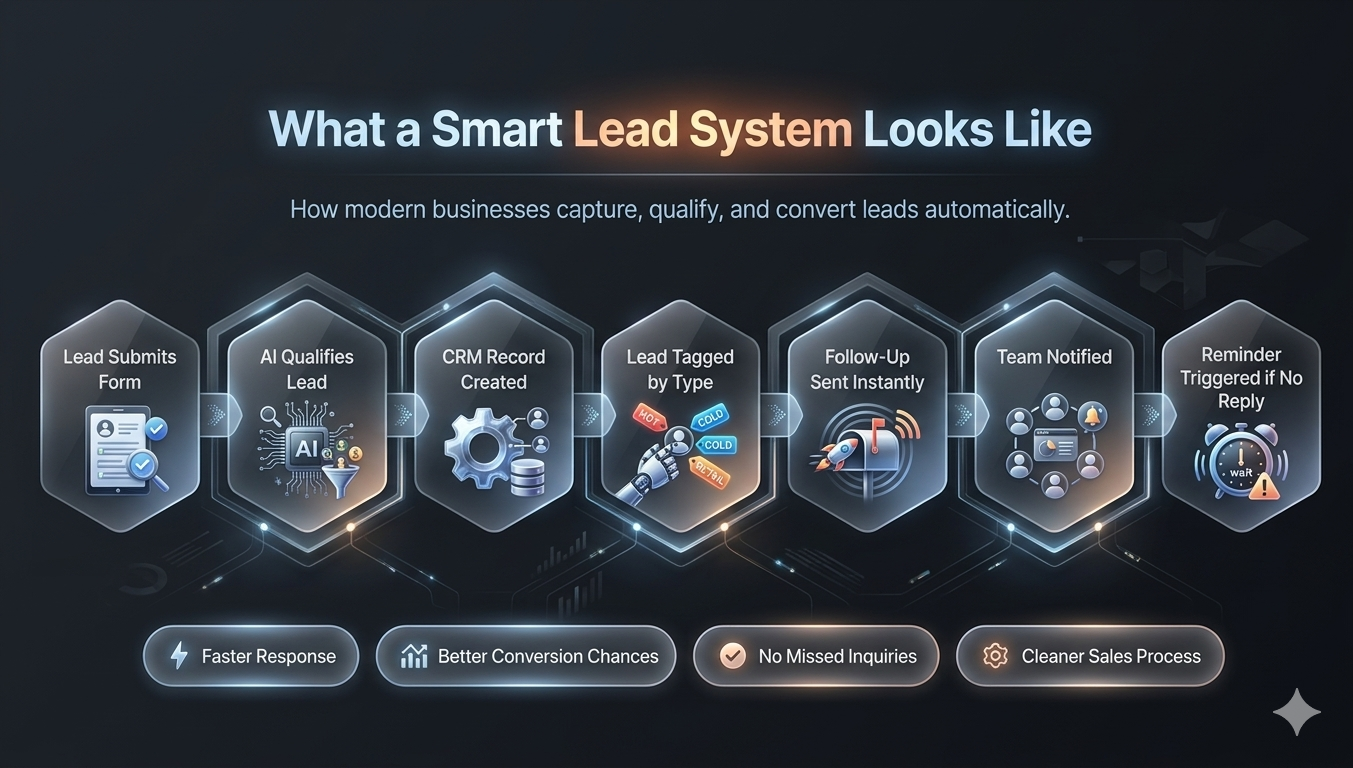
Lead generation is one of the most important aspects of real estate. However, identifying high-quality leads manually can take significant time and effort.
AI-powered automation tools can analyze user behavior, property searches, and engagement data to identify potential buyers or sellers. These systems automatically score and prioritize leads so agents can focus on the most promising opportunities.
Automation also helps companies manage large volumes of inquiries from websites, advertisements, and listing platforms.
2. AI Chatbots for Customer Communication
Real estate customers expect quick responses when they inquire about properties. AI chatbots allow businesses to provide instant responses 24/7.
These chatbots can:
- Answer common property questions
- Schedule appointments
- Share listing details
- Capture lead information
Guide buyers through property options
Automated communication improves customer experience and ensures that potential clients receive immediate assistance.
3. Smart Property Recommendations
AI systems analyze customer preferences, browsing history, location preferences, and budget to recommend properties that match buyer interests.
Instead of manually searching through hundreds of listings, buyers can receive personalized property suggestions instantly.
This technology increases engagement and improves the chances of converting leads into successful property transactions.
4. Predictive Market Analysis
Real estate decisions depend heavily on market trends and pricing strategies. AI automation helps companies analyze large datasets including property values, economic indicators, and local demand.
Predictive analytics can help companies:
- Forecast property price trends
- Identify high-growth investment areas
- Analyze buyer demand patterns
- Optimize property pricing strategies
These insights help businesses make smarter investment and marketing decisions.
5. Property Management Automation
Property managers often deal with multiple tasks such as tenant communication, maintenance scheduling, rent collection, and documentation.
AI-powered automation tools can simplify these processes by automatically handling routine tasks.
Examples include:
- Automated rent reminders
- Maintenance request management
- Tenant communication automation
- Lease document management
These systems help property managers save time and improve operational efficiency.
AI Automation in Real Estate Marketing
Marketing plays a major role in the real estate industry. AI automation is helping agencies improve marketing performance and generate more leads.
Automated Email Campaigns
AI systems can automatically send personalized emails to potential buyers based on their property interests. These campaigns keep customers engaged and increase the chances of closing deals.
Smart Advertising Optimization
AI tools analyze advertising performance and automatically adjust campaigns to improve results. Real estate companies can target the right audience and reduce marketing costs.
Content and Listing Optimization
Automation tools can optimize property descriptions, recommend keywords, and improve listing visibility on search engines and property portals.
How AI Improves Real Estate Decision-Making
AI automation helps businesses transform raw data into valuable insights. Real estate companies collect massive amounts of information including:
- Property pricing data
- Buyer behavior
- Market trends
- Investment performance
AI systems analyze this data to provide actionable insights. This allows real estate professionals to make faster and more accurate decisions.
Companies can identify profitable investment opportunities, predict future demand, and optimize their business strategies using data-driven intelligence.
Challenges of AI Adoption in Real Estate
Despite the benefits, some real estate businesses still face challenges when adopting AI automation.
Data Quality Issues
AI systems rely heavily on accurate data. Poor data quality can reduce the effectiveness of automation tools.
Technology Integration
Integrating AI systems with existing real estate platforms and CRM systems may require technical expertise.
Initial Investment
Implementing AI solutions may require upfront investment in technology and training. However, the long-term benefits usually outweigh the initial costs.
The Future of AI Automation in Real Estate
AI automation will continue to transform the real estate industry in the coming years. As technology advances, we can expect even more intelligent solutions.
Future innovations may include:
- AI-powered property valuation models
- Automated property investment platforms
- Virtual property tours powered by AI
- Intelligent real estate assistants
Companies that adopt these technologies early will gain a competitive advantage in the market.
Conclusion
AI automation is transforming the real estate industry by improving efficiency, reducing operational workload, and enabling smarter decision-making. From automated lead generation and customer communication to predictive analytics and property management, AI technologies are reshaping how real estate businesses operate.
As digital transformation continues, real estate companies that embrace AI automation will be better positioned to scale their operations, deliver improved customer experiences, and stay competitive in a rapidly evolving market.


Published Date:
Thu Apr 02 2026